
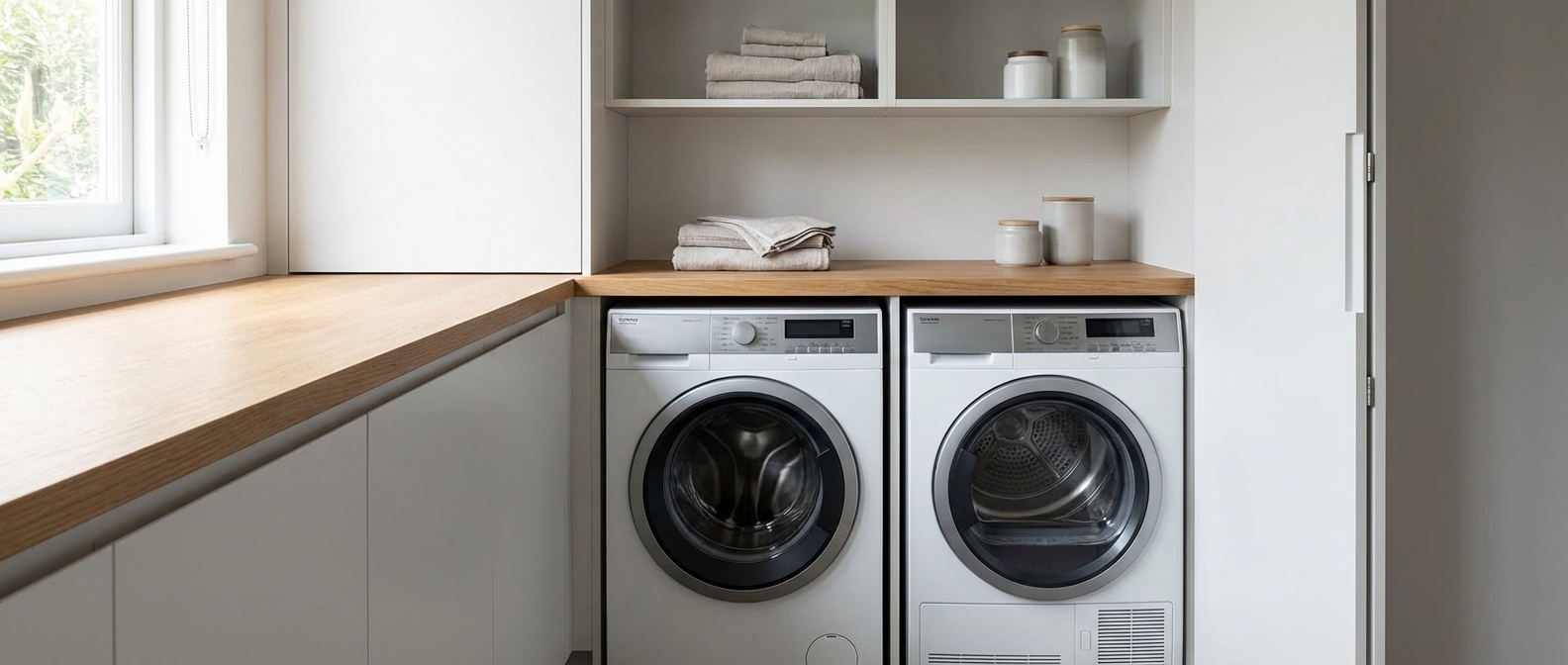
Designing a laundry that works as hard as your kitchen? Here’s the expert, Australian-focused guide to washer and dryer sizes, bench heights, clearances and cabinetry so your new laundry fits perfectly and performs beautifully.
This practical guide brings together the most useful measurements and planning tips for Australian homes, focused on front-loaders, dryers (vented, condenser and heat pump), and common cabinetry solutions. Use it to verify appliance fit, avoid costly surprises and align your laundry design with kitchen joinery and ergonomics.
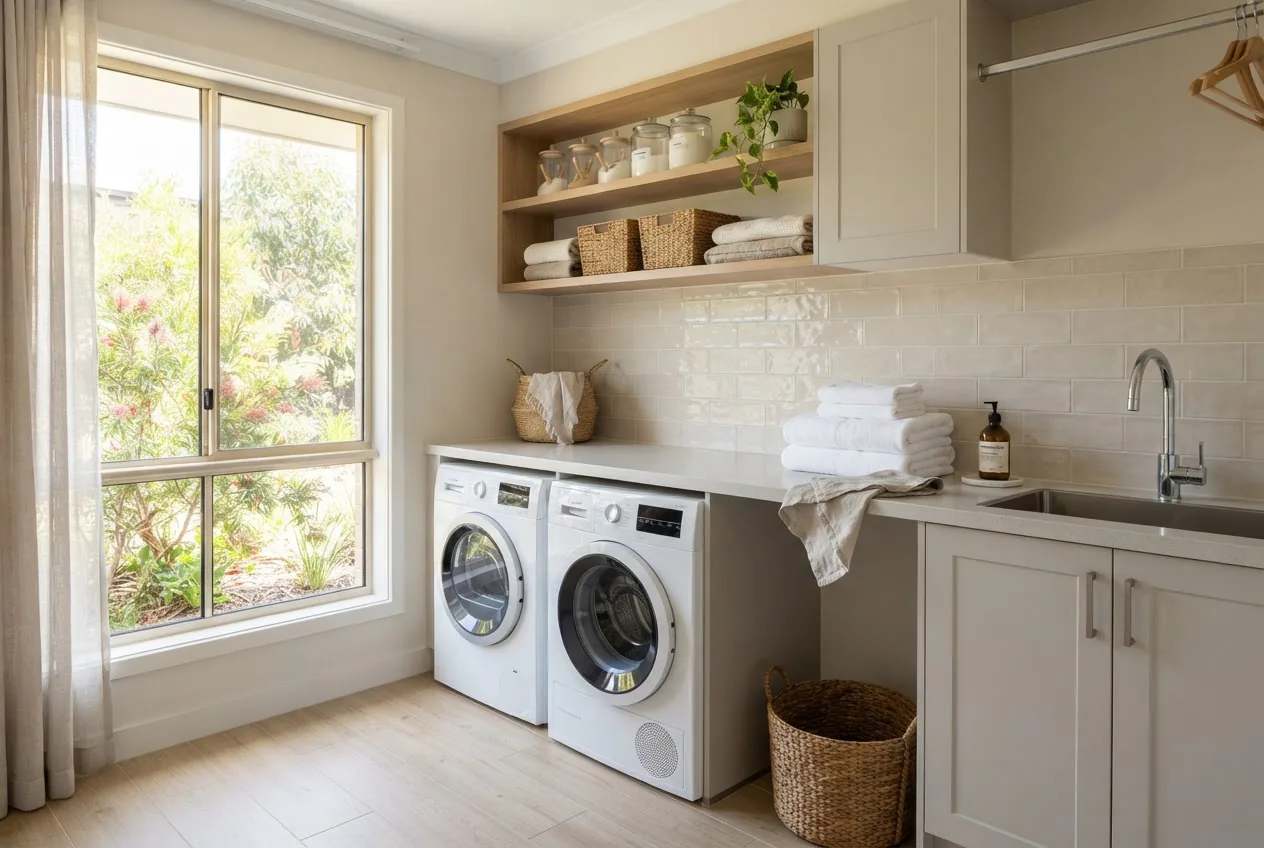
This article also includes practical checklists, WA case studies and renovation timelines so you can plan a realistic budget and an installation program that avoids delays.
Quick answer: standard width of washer and dryer
- Front-loader clothes washer width: typically 595–600 mm
- Front-loader dryer width: typically 595–600 mm
- Top-loader washer width: approx. 540–700 mm (varies by capacity)
- Standard height for washing machine: around 850 mm (front loaders)
- Typical laundry machine height (dryers): 840–900 mm
- Standard laundry bench height: 900 mm (880–950 mm range to suit ergonomics)
- Minimum practical clearances: 5–10 mm each side; 60–100 mm behind for hoses/vents
For a 600 mm module, most Australian front loaders and dryers fit neatly under or beside a benchtop, provided you allow proper clearances and power/water access.
Quick planning tip: always verify the manufacturer’s installation manual and measure the appliance in place (including leveling feet and door trims) before finalising cabinetry openings.
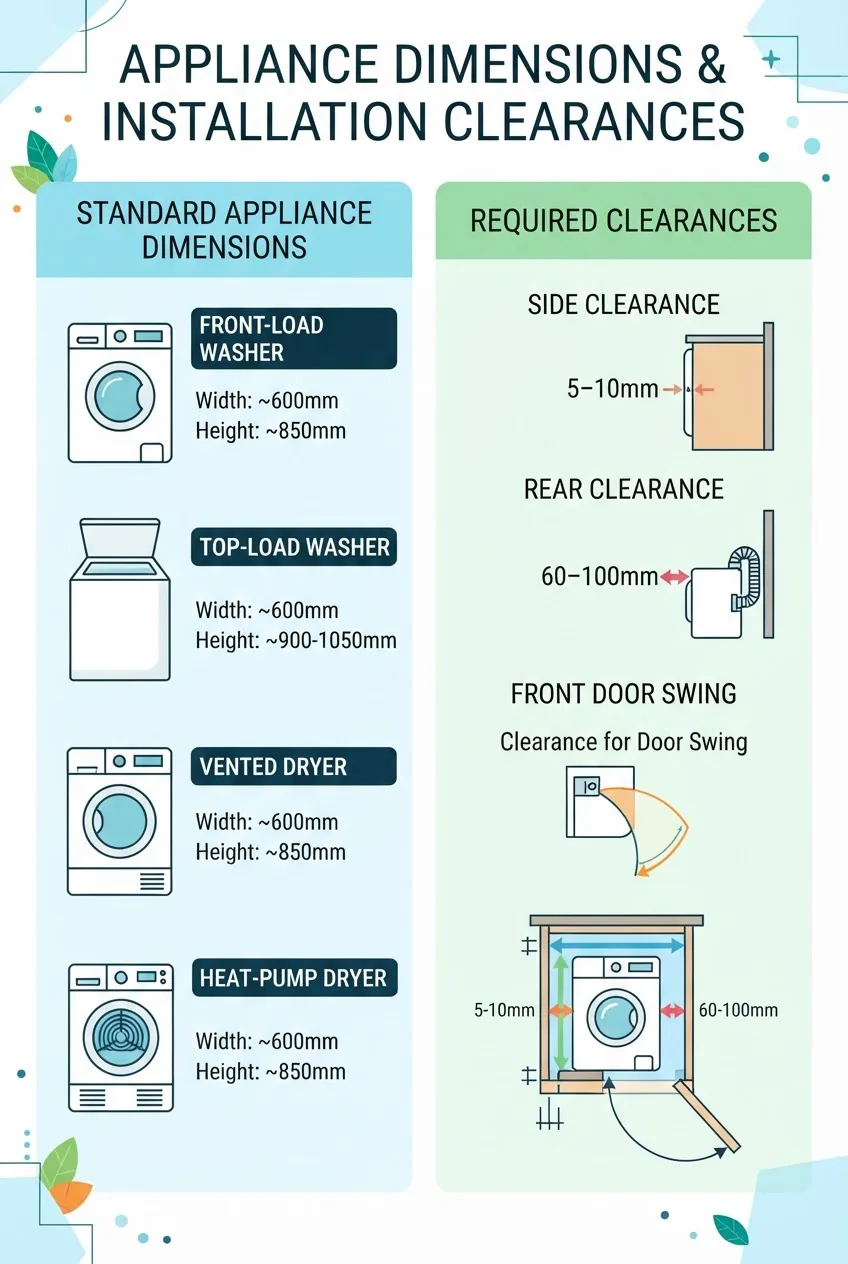
Washer and dryer measurements in Australia (what to allow)
Typical washing machine and dryer sizes
- Front loader washing machine dimensions (Australia): W 595–600 mm, H ~850 mm, D 550–650 mm
- Condenser/heat pump dryer size: W 595–600 mm, H 840–850 mm, D 600–700 mm (heat pump often deeper)
- Vented dryer size: W 595–600 mm, H ~840 mm, D 500–600 mm
- Top loader washing machine: W ~540–700 mm, H ~950–1100 mm, D 540–700 mm (usually not under-bench friendly)
The internal depth available for an appliance, measured from the back panel to the inside face of the door/fascia. Always include hose bends and door thickness in your measurement.
Clearances that protect your appliances and cabinetry
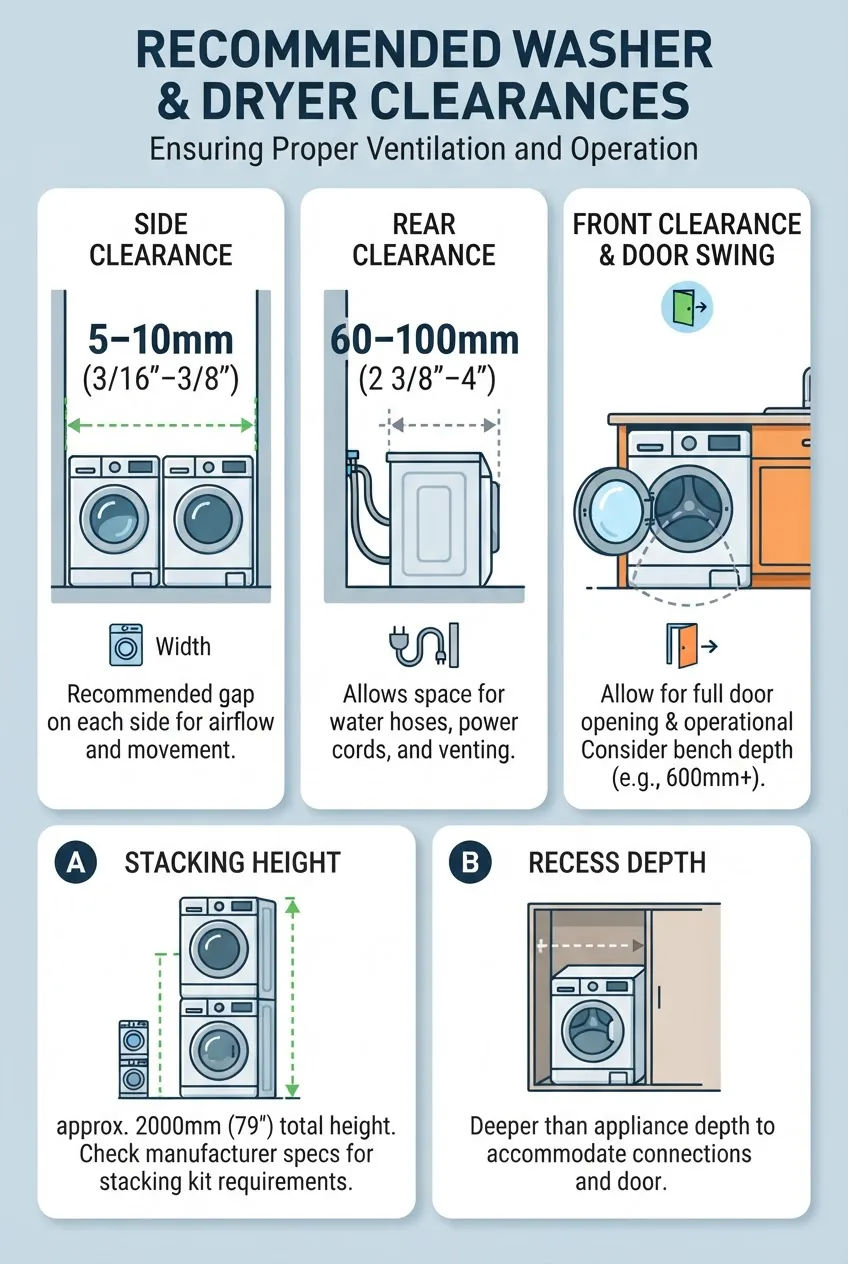
- Sides: allow 5–10 mm per side to reduce vibration transfer and for installation tolerance.
- Rear: allow 60–100 mm for hoses, power plug and vent paths (check your model’s installation manual).
- Front: ensure full door swing; a 600 mm deep benchtop with a 20–40 mm overhang usually clears most front-loader doors.
- Stacking: when stacking a washer and dryer, use the manufacturer’s stacking kit and keep total height under approx. 1700–1750 mm where possible for safe reach.
A purpose-designed frame or shelf that secures a compatible dryer above a front-loader washing machine. It improves safety, reduces vibration and preserves warranties.
Common pitfalls to avoid
Even with standard measurements available, renovators frequently run into the same issues. Watch for these to keep your project on schedule:
- Assuming every “600 mm” appliance will fit a 600 mm cabinet—measure full width including trims and allowance for leveling feet.
- Ignoring recess depth: hoses, plug packs and ventilation often add 50–150 mm behind the machine.
- Forgetting door swing and adjacent cabinetry—draw a full-size door swing on-site before installing fixed panels.
- Specifying a non-vented dryer in a sealed tall cabinet without passive vents—this causes overheating and moisture build-up.
- Leaving appliance services inaccessible; position GPOs and taps where they can be reached without removing the machine.
If you’re unsure about a model’s space needs, measure the appliance including the hoses, plug and any rear-mounted components, and allow extra for airflow and leveling before committing to cabinetry sizes.
Under-bench vs stacked vs tall cabinet
- Under-bench (front loader + bench): suits 900 mm bench height; ideal for folding space and a deep engineered stone benchtop.
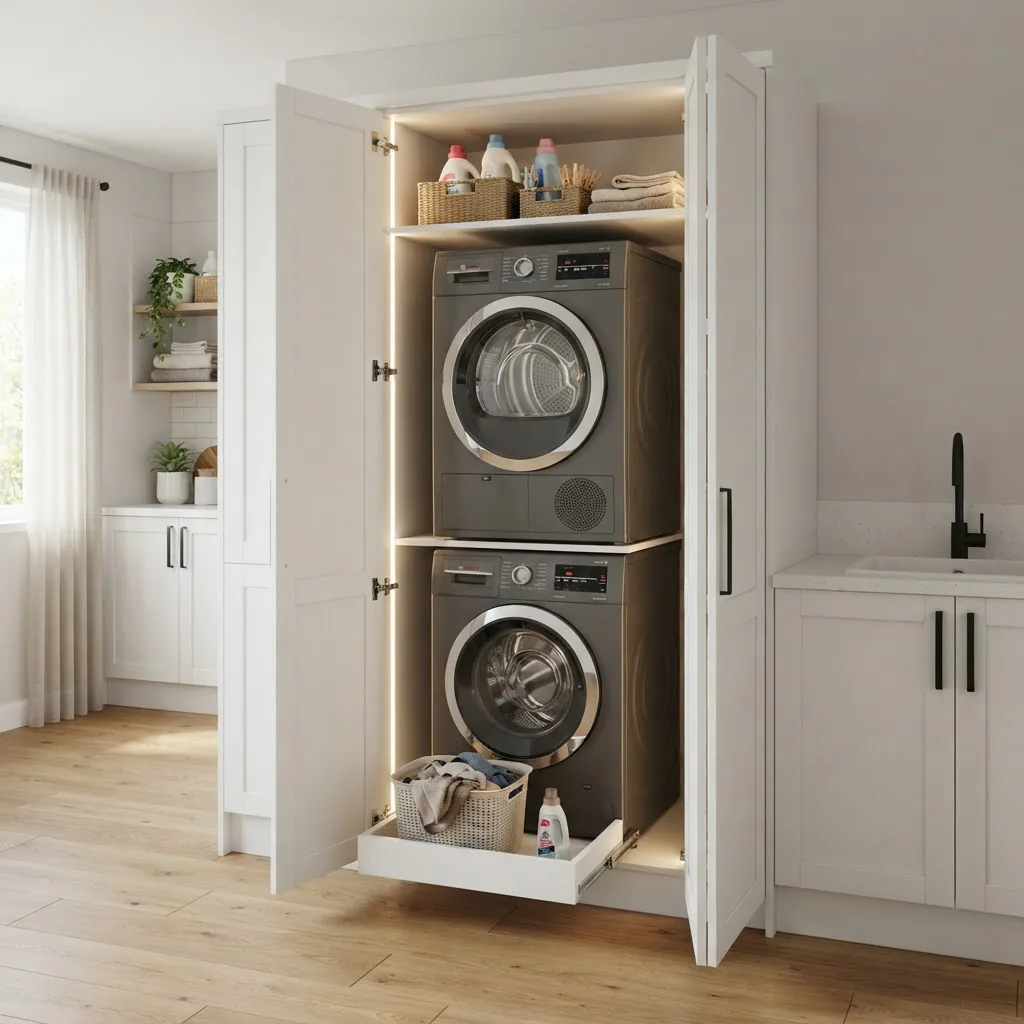
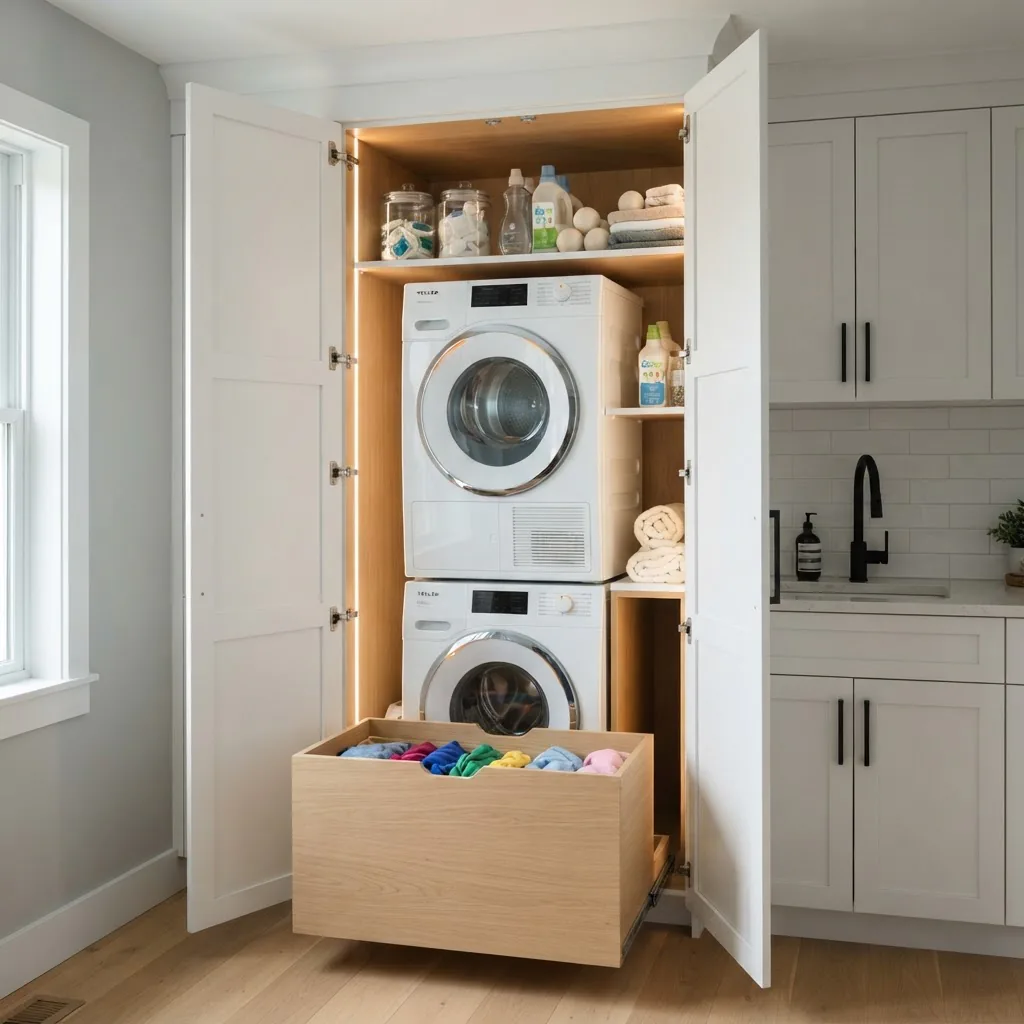
- Stacked (washer below, dryer above): best for compact laundries and European-style cupboards; ensure ventilation and door access.
- Tall cabinet integration: doors conceal appliances; ensure a louvre panel or passive vents for condenser/heat pump dryers.
Note for WA homes: Heat pump dryers are increasingly popular in Perth thanks to lower running costs and no external venting, but they are often deeper. Our designers account for door thickness and skirting to keep everything flush.
Planning and measuring for cabinetry
Step 1: Confirm your appliance models first
Appliance selection drives cabinetry. Lock in exact washer and dryer measurements, then design the joinery. This prevents costly rework.
Step 2: Measure your space accurately
- Floor to underside of benchtop: target 870–880 mm clear space for an 850 mm front loader.
- Internal cabinet width: allow appliance width + 10–20 mm total tolerance (e.g., 595 mm washer in a 610–620 mm opening).
- Recess depth: allow appliance depth + hoses + door thickness; 650–700 mm is a safe working number for many setups.
- Power and water: position GPOs in an adjacent cabinet or high on the wall (accessible), not directly behind the machine where access is restricted.
Electrical: AS/NZS 3000 (Wiring Rules) — use a licensed electrician. Plumbing: AS/NZS 3500. Wet-area detailing: AS 3740. Always follow your appliance installation manual.
Bench height and ergonomics
Laundry bench height of 900 mm is the Australian worktop norm, matching kitchens. Taller homeowners may prefer 920–950 mm with kickboard adjustment, while shorter users might opt for 880–890 mm. Consider the thickness of your benchtop (e.g., 20 mm engineered stone or 33–38 mm laminate) and the height of washing machine to ensure it slides under comfortably.
For kitchen renovations Perth clients who want cohesive styling across kitchen, scullery and laundry, we often mirror door profiles (e.g., Shaker kitchen or Hamptons style), handles and soft-close drawers for a seamless home feel.
Practical tip: make a full-size cardboard template of the machine to check door swing, reach to taps and fit of skirting before cabinetry is fixed.
Laundry renovation process (WA)
- Consultation and brief: Space assessment, appliance list, storage goals, ventilation approach.
- Design and 3D visuals: Custom cabinetry WA-made, appliance integration, splashback and lighting plan.
- Selections: Benchtops (engineered stone or laminate), doors, hardware, sinks, tapware, flooring.
- Services plan: Plumbing points, wastes, GPOs and task lighting; confirm dryer venting or heat-pump airflow.
- Compliance checks: Align with HIA/Master Builders guidance, AS/NZS standards and strata rules for apartments.
- Manufacture and install: Precision install, scribing, caulking, waterproofing details where required.
- Handover: Appliance testing, care instructions and warranty pack.
Materials and finishes
The laundry cops moisture, heat and abrasion. Our designers specify durable finishes used in premium kitchens—think engineered stone benchtops, high-pressure laminate benchtops, moisture-resistant melamine cabinetry and sealed edges.
Engineered Stone vs Laminate (Laundry Benchtops)
| Feature | Engineered Stone | Laminate |
|---|---|---|
| Typical thickness | 20 mm (with options) | 33–38 mm |
| Cost | $$$ (higher) | $ (budget-friendly) |
| Heat/Moisture resistance | Excellent; use trivets for hot dryer exhaust areas | Good; avoid prolonged pooling water and direct heat |
| Maintenance | Low; non-porous, easy to wipe | Low; avoid cutting directly on surface |
| Aesthetics | Premium look; seamless with waterfall edge | Huge decor range; realistic stone/timber looks |
| Notes for Australia | Consider low-silica products and licensed fabrication | Great value, quick lead times |
Other smart inclusions
- Undermount sink with drainer space
- LED task lighting under overhead cabinets
- Porcelain tile or glass splashback behind taps
- Matte black or stainless tapware with pull-out spray
- Moisture-resistant carcase boards and soft-close hardware
A cabinet door fixed to the appliance face so it looks like a normal cupboard. Common in European laundries to hide machines behind panelwork.
Flooring: choose slip-resistant, water-tolerant flooring such as porcelain tile or vinyl; consider upstands at the wall in wet zones for durability and easy cleaning.
Layouts, styles and storage ideas
Layouts that work
- Single wall: Side-by-side front loader and dryer under a 600 mm deep benchtop with overheads to 2100–2300 mm.
- Galley or L-shape: Add a tall broom cupboard and pull-out hampers; keep the wet zone together.
- European laundry: Stack machines in a 700–750 mm deep cupboard with bi-fold or pocket doors and ventilation.
- Scullery link: When a laundry connects to a butler’s pantry or scullery, repeat door profiles (e.g., Shaker kitchen) for continuity.
Style pointers
- Hamptons style: Shaker doors, satin white, brushed nickel handles.
- Contemporary: Flat-panel doors, integrated appliances, warm timber-look laminates.
- Family-friendly: Extra hanging rail, fold-out ironing, soft-close drawers for detergents.
Accessibility: leave a clear 600–760 mm path in front of machines for loading and maintenance; in narrow laundries consider bi-fold or pocket doors to save swing space.
Costs and timelines (indicative, Perth/WA)
- Cabinetry and benchtops: $6,000–$12,000 (compact) / $12,000–$25,000 (mid-range) / $25,000–$40,000+ (premium custom)
- Appliances: Washer $700–$2,000; Dryer $600–$2,500 (heat pump $1,200–$3,000)
- Plumbing and electrical: $800–$2,500+ depending on upgrades and compliance
- Ventilation/ducting: $300–$1,200 (if vented dryer)
- Timeline: 3–6 weeks design/approve; 3–6 weeks manufacture; 1–3 weeks on-site works
Every project is unique. Our team provides fixed quotes and clear programs so your laundry upgrade lands on time and on budget.
Tip: Ask for itemised quotes that separate cabinetry, appliances, and services so you can see where cost variations occur and plan any appliance upgrades without surprise costs.
Ask for itemised timeframes and payment milestones to control cashflow during the renovation and reduce the risk of scope creep.
Practical checklist: make your laundry work
- Confirm model numbers and exact dimensions for washer dryer.
- Choose layout: side-by-side under bench, stacked, or tall cabinet.
- Set bench height to 900 mm (or customise to suit user height).
- Allow side/rear clearances and door swing; plan recess depth carefully.
- Place GPOs in accessible positions; avoid tight behind-appliance locations.
- Provide ventilation for condenser/heat pump dryers.
- Use moisture-resistant cabinetry and sealed edges.
- Include sorting hampers, hanging rail and a deep sink.
- Match finishes to your kitchen for a cohesive renovation.
- Book licensed WA trades and verify AS/NZS compliance.
WA case examples
Case 1: Subiaco apartment European laundry
Goal: fit a 600 mm washer and 600 mm heat pump dryer in a hall cupboard. We specified a stacking kit, 720 mm deep cabinet with side vents, a 20 mm engineered stone benchtop shelf, and a pull-out hamper. Result: Quiet, efficient laundry hidden behind flat-panel doors.
Case 2: Fremantle family home, side-by-side layout
Goal: create folding space and storage. We placed a 595 mm front loader and 600 mm condenser dryer under a 900 mm high engineered stone benchtop, added overheads to 2300 mm, and lined the splashback with porcelain tile. The look ties in with the Hamptons-style kitchen across the hall.
Talk to Joyce Kitchens
From custom cabinetry WA to appliance integration, Joyce Kitchens designs and builds laundries that fit Australian machines perfectly and look as good as your kitchen. Book a design consultation and see what’s possible.
We can review your appliance spec sheets, check clearances and create a detailed cabinetry opening plan so your new machines slide in without fuss. Contact our design team to start your laundry renovation with confidence.
Request a quote or site measure to have your appliance spec sheets reviewed before cabinetry manufacture and reduce the chance of on-site surprises.
FAQ
What is the standard width of a washer and dryer in Australia?
Most front-loader washers and front-loader dryers are 595–600 mm wide. Top-loader washers vary from about 540–700 mm wide, so check the spec sheet before designing cabinetry.
What is the standard height for a washing machine and laundry bench?
Front-loader washing machines are typically about 850 mm high. A comfortable laundry bench height is 900 mm (you can adjust 880–950 mm to suit the user and benchtop thickness).
How much clearance do I need around a washing machine and dryer?
Allow 5–10 mm each side and 60–100 mm behind for hoses, plugs and airflow. Stacked setups need a manufacturer-approved stacking kit and safe total height for reach.
Can I fit a washer and dryer in a 600 mm cabinet?
Yes, most 595–600 mm front loaders will fit a 600 mm module with a little tolerance. Ensure adequate depth, ventilation (especially for condenser/heat pump dryers) and accessible power/water.
Is stacking a washer and dryer safe and compliant in WA?
Yes—use the appliance maker’s stacking kit, ensure level installation and suitable ventilation, and have electrical and plumbing done by licensed trades per AS/NZS 3000 and AS/NZS 3500.