Introduction — Overview of Kitchen Renovation Trends 2025
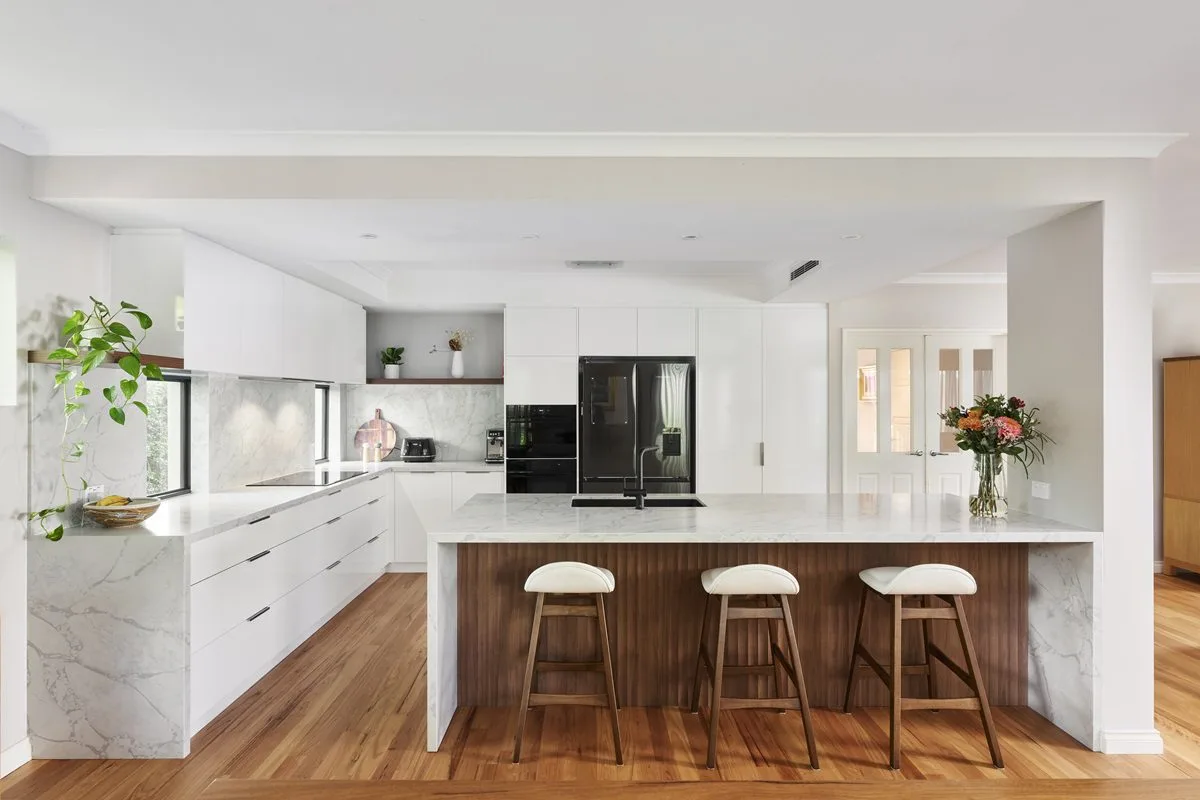
Kitchen renovation Australia is heading into 2025 with a clear focus on spaces that feel personal, practical, and future-ready. Homeowners want more than a beautiful room; they want functional kitchen updates that improve daily life, reduce energy use, and support modern kitchen styles that still feel warm and welcoming. At Joyce Kitchens, we’re seeing strong demand across Perth for kitchens that combine sustainable kitchens thinking with smart functionality, timeless finishes, and cleaner layouts.
In this article, we’ll explore the kitchen renovation trends 2025 homeowners are asking for most, from recycled timber and smart appliances to bold colours, hidden storage, and better lighting. We’ll also cover renovation planning, budgeting, and what to expect when you’re working through design decisions. If you’re gathering ideas for your own project, this guide will help you balance style, performance, and long-term value.
Whether you’re planning a full gut renovation or a targeted update, the notes below highlight practical choices and the trade-offs to consider so your finished kitchen delivers everyday comfort and lasting value.
Sustainable and Eco-Friendly Materials
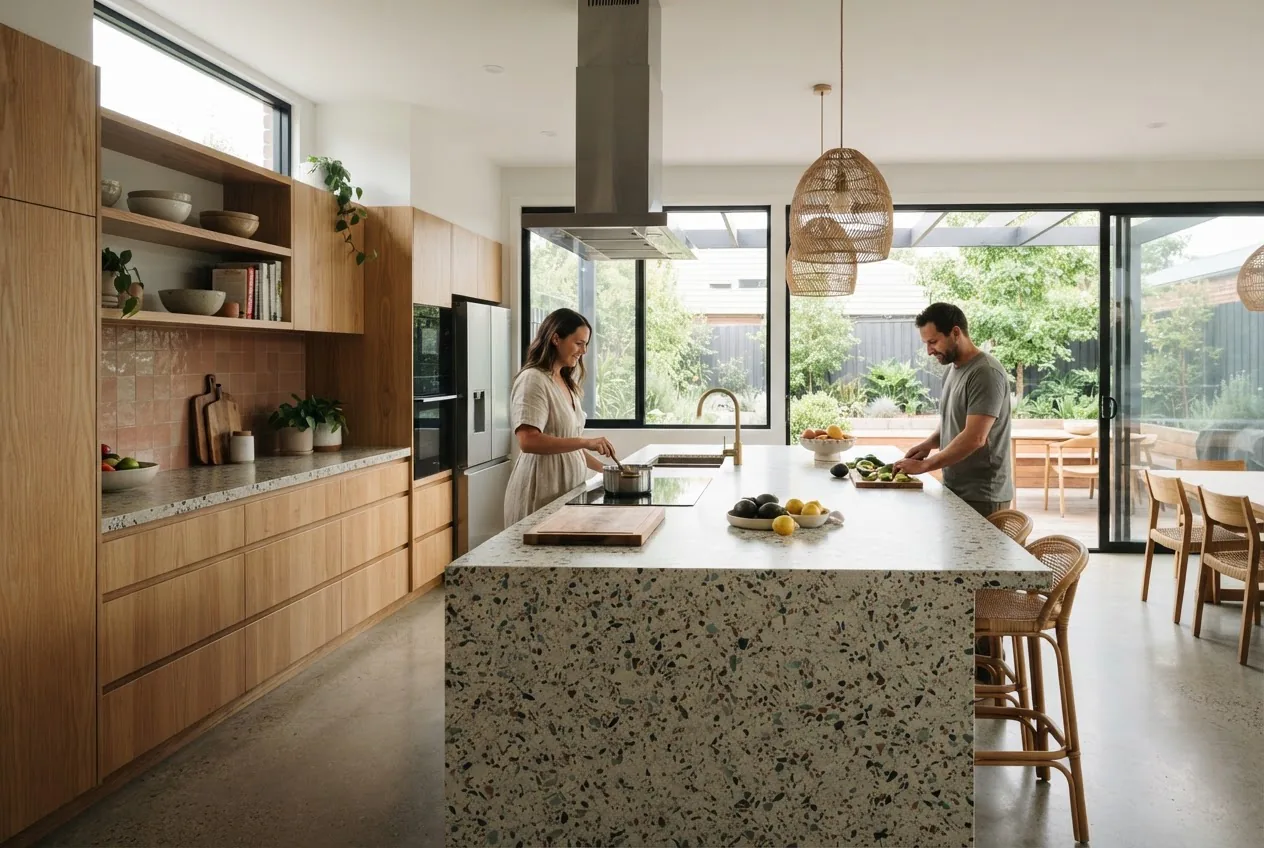
Sustainable kitchen materials are one of the strongest 2025 design drivers, and for good reason. Homeowners are increasingly asking for recycled timber cabinetry, reclaimed timber details, bamboo shelving, low-VOC paints, and recycled glass countertops. These choices can reduce environmental impact while giving the kitchen a warmer, more natural feel. Environmentally responsible sourcing also matters: materials certified by the Forest Stewardship Council (FSC) or PEFC help confirm that timber comes from responsibly managed forests. FSC and PEFC are independent certification systems that support traceable, lower-impact supply chains.
At Joyce Kitchens, we’ve seen sustainability move from “nice to have” to a core design requirement. One Perth client in Mount Pleasant wanted a family kitchen that felt organic and durable, so we paired FSC-certified timber veneer with low-VOC finishes and a recycled glass benchtop. The result was a bright, textured space that felt premium without being flashy, and the client told us it “feels healthier and calmer every day.” The recycled content also helped lower embodied carbon compared with a fully virgin-material build.
Perth project example: sustainable family kitchen
In a South Perth renovation, we used bamboo shelving, reclaimed timber accents, and low-VOC cabinetry paint to create a softer, coastal look. The owners wanted a design that would age well and stand up to busy family use. The finished kitchen delivered strong durability, easier maintenance, and a lower-impact material profile, while still feeling elegant and contemporary.
Cost vs. benefit
- Initial cost: Sustainable materials can sit around mid-range to premium pricing, depending on product grade and certification.
- Lifecycle savings: Durable finishes and better sourcing can reduce replacement costs over time.
- Resale impact: Buyers increasingly respond to homes with visible eco-credentials and quality materials.
When selecting sustainable finishes, ask suppliers for product data sheets and maintenance recommendations so you understand long-term performance and care requirements. Clear documentation also helps with resale because it demonstrates responsible sourcing and durability.
Smart Kitchens and Technology Integration
Smart kitchens are becoming more common in technology-enhanced kitchens across Australia, especially as homeowners look for convenience, precision, and better energy management. Popular smart appliances now include Bosch Home Connect ovens, Samsung and LG smart fridges, and integrated cooking appliances that work with Google Assistant or Amazon Alexa. Automated faucets and voice control lighting are also growing in popularity, particularly in busy family kitchens where hands-free operation is useful. In most cases, installation requires suitable power supply, stable Wi-Fi coverage, and compatibility checks before cabinetry is finalised.
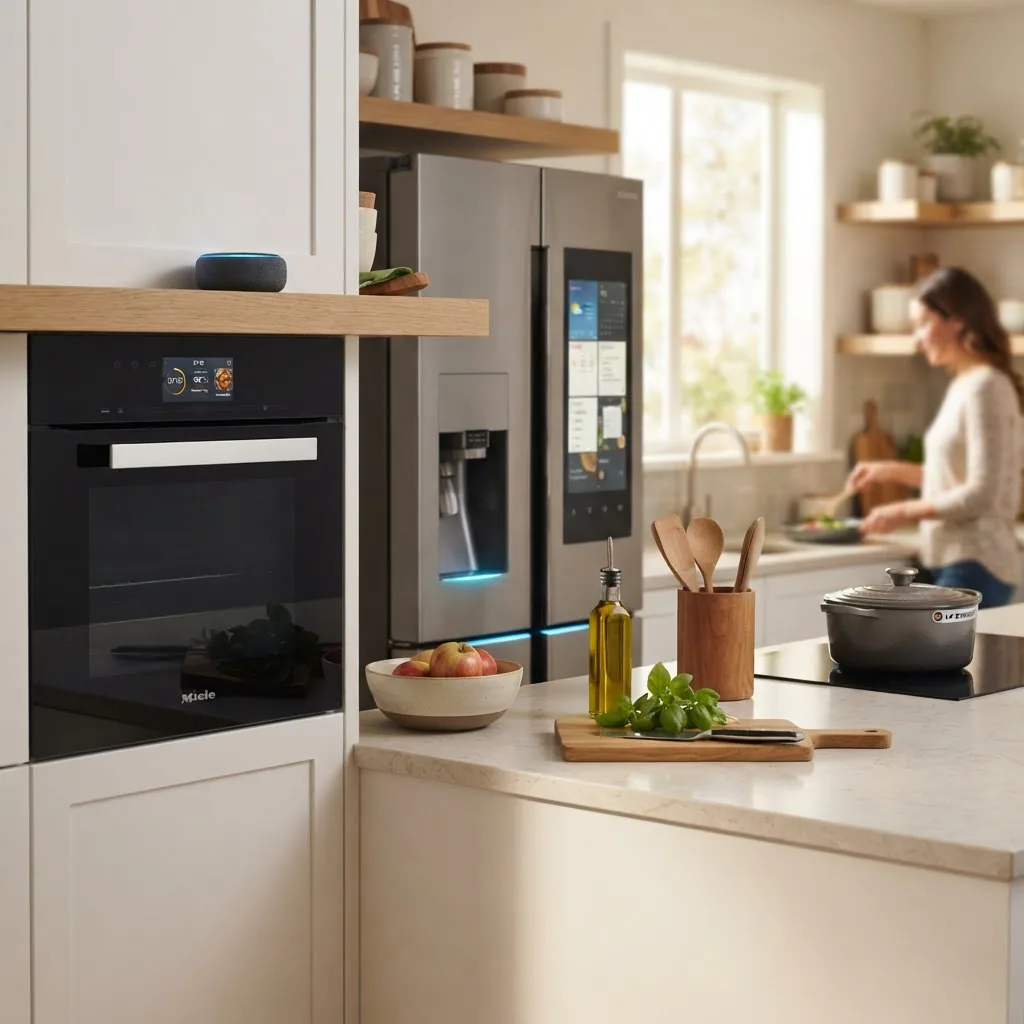
Here’s a simple integration walkthrough:
- Confirm which appliances need dedicated circuits, data access, or upgraded power points.
- Choose a platform first, such as Google Home, Alexa, or a brand-specific app ecosystem.
- Check cabinet clearances, ventilation, and connectivity before ordering.
- Test app pairing, automation routines, and network strength before final handover.
Security and privacy are worth considering too. Any IoT kitchen devices should use strong passwords, regular firmware updates, and secure home networks. The upside is better energy control, remote monitoring, and in some cases lower power use through scheduled or adaptive operation. For more home automation ideas, our team can help you plan a kitchen that feels genuinely connected, not gimmicky.
Bold Colours and Contrasting Designs
Bold cabinetry is firmly on trend in 2025, with forest green kitchens, navy blue, and matte black finishes leading the way. These shades can add depth and personality, especially when paired with lighter stone, timber, or limestone tones. A useful design rule is to treat bold colour as the statement, then balance it with calmer surfaces so the room still feels easy to live in.
Two strong combinations we’re seeing in Australia are forest green #014421 with limestone #F2F0EA, and navy #0B1F3A with brushed oak #D8C3A5. For cabinetry, a high-quality low-VOC paint finish is a smart choice because it supports indoor air quality and usually wears better than cheaper coatings. For resale value, we often recommend bold lower cabinets or an island, while keeping countertops and splashbacks more neutral. That way, the kitchen still feels distinctive without becoming too polarising for future buyers.
Before committing, test paint samples in different parts of your kitchen and view them at various times of day—light can change how a deep colour reads, and a small sample in isolation rarely tells the full story.
Open Shelving for Accessibility and Display
Open shelving remains popular because it makes kitchens feel lighter, more accessible, and visually relaxed. It works well for decorative kitchenware, everyday glassware, and pieces you want close at hand. Material choices such as powder-coated steel, solid timber, or sealed marine plywood can all work, but the installation has to be properly engineered. As a general guide, long shelf spans need adequate support brackets and fixings into structural cabinetry or wall framing, particularly if you plan to store heavy items like ceramics or glass jars.
A practical approach is to combine open shelves with closed storage so the room stays both airy and functional. In one Perth apartment renovation, we added two timber open shelves above the sink to improve accessibility for the homeowner, who wanted easier access to daily dishes without sacrificing storage. The rest of the kitchen used deep drawers and a hidden pantry, so the design stayed neat while becoming easier to use. This mix of display and utility is why open shelving continues to work in real homes, not just styled photos.
Enhancing Natural Light and Windows
Natural light kitchen design is still one of the most effective ways to improve both comfort and atmosphere. Large kitchen windows, skylights, and carefully placed glazing can transform a closed-in room into a bright, welcoming hub. Fixed windows are ideal where you want uninterrupted light, awning windows suit ventilation over benchtops, and sliding windows are useful where access or pass-through functionality matters. Skylights come in two common forms: tubular options, which suit smaller or more enclosed spaces, and flat skylights, which can bring a broader wash of daylight into larger rooms.
For energy efficiency, double-glazing is worth considering because it helps reduce heat gain and loss, especially in exposed areas. In some parts of Australia, bushfire-rated glass may also be required or recommended, depending on location and planning conditions. For broader lighting and daylight guidance, see the Australian Government’s energy advice at energy.gov.au.
Minimalist Designs with Hidden Storage
Minimalist kitchens are still highly desirable in 2025, but the look only works when the storage is exceptionally well planned. Handleless cabinetry, clean lines, and decluttered kitchen countertops create a calm visual effect, while hidden pantries and pull-out drawers keep everyday life practical. We often specify soft-close Blum runners and Häfele pull-out systems because they offer smooth action, good weight capacity, and long-term durability. Pantry zones are typically most useful when designed with practical depth in mind; many kitchens perform well with pantry cabinetry around 300–600 mm deep, depending on access and the items being stored.
For homeowners considering a more streamlined finish, hidden pantries are a great way to preserve the look of the room while keeping appliances, dry goods, and cleaning products out of sight. If you’d like to explore layout ideas,
Sustainable and Energy-Efficient Lighting Options
Lighting is one of the simplest ways to make a kitchen feel premium while cutting long-term energy use. LED kitchen lighting remains the clear leader because it uses far less power than halogen and produces less heat. As a rule of thumb, task lighting around benchtops often sits in the 400–800 lumen range per fitting, while ambient lighting may sit lower depending on room size and ceiling height. For warm, inviting kitchens, 2700K to 3000K is a popular colour temperature. In many homes, LEDs can reduce energy use by around 70–80% compared with older halogen options.
Dimmable under-cabinet lighting is especially useful because it improves visibility when cooking while allowing softer lighting in the evening. Australian guidance on efficient appliances and lighting is available through energy.gov.au, and it’s a helpful reference point when comparing fixture types.
Where possible, integrate lighting control systems early in the design so switching, dimming and scene-setting are placed where they’re genuinely useful. Smart lighting can also be scheduled to reduce evening energy demand and improve ambience.
Trend of Mixed Metals in Kitchen Hardware
Mixed metal finishes are now one of the most flexible kitchen hardware trends because they let you layer warmth and contrast without overwhelming the room. The key is restraint: limit yourself to two or three metals, and anchor one of them to the plumbing fixtures or tapware so the design feels intentional. Common combinations include brushed nickel with brass accents, or matte black with brushed nickel and a small amount of brass for warmth. These finishes work particularly well when the cabinet colour is understated.
From a maintenance perspective, higher-quality plated finishes generally wear better and are easier to keep clean than low-grade coatings, especially in busy family kitchens. We usually remind clients that fingerprints, water spots, and cleaning products can affect certain finishes over time, so it’s wise to choose hardware that suits your lifestyle. For resale, mixed metals are usually safest when the palette is coherent and not too trend-heavy, allowing future buyers to read the kitchen as thoughtful rather than overly stylised.
When specifying hardware, try to match finish grades between high-use items (like handles and tapware) to reduce visual friction and simplify replacement in the future.
Large Kitchen Islands as Multi-Functional Centers
Large kitchen islands are becoming true work centres in modern Australian homes. A well-designed island can act as a prep zone, casual dining spot, extra storage hub, and even a secondary sink or cooktop location. In practical terms, many kitchens work best when island bench depth is generous enough for prep and seating, while circulation clearances of about 1,000 to 1,200 mm are maintained around the island so the room feels comfortable to move through. If you are adding plumbing or electrical services, plan early for power circuits, waste lines, and any dishwasher or sink requirements.
Cost can vary widely depending on materials, services, and joinery complexity, but a multifunctional island often becomes one of the best-value features in the kitchen because it improves both usability and resale appeal.
For seating, allow approximately 300–400 mm knee space and plan an overhang that suits your stool height and legroom so dining is comfortable without compromising prep space.
Perth project example: island-led family hub
In a Cottesloe renovation, we designed a broad island with seating for four, concealed storage, and an undermounted sink. The brief was to improve social flow while keeping the work zone efficient. By planning services early and selecting durable engineered stone, the finished space became the home’s main gathering point and simplified everyday meal prep. The clients said it “changed how the whole house works.”
Timeless Designs with a Modern Twist
Timeless kitchen design remains one of the safest and smartest investments, especially for homeowners who want style without constant updating. Shaker-style cabinets are still a favourite because their proportions feel classic, but they can be freshened with matte finishes, slim handles, and concealed appliances. Marble countertops remain beautiful and luxurious, although engineered-stone countertops often offer better stain resistance, lower maintenance, and a more predictable look for busy households. If you love the marble aesthetic but want easier care, engineered stone can be the more practical long-term choice.
We often recommend this design direction to clients who want a kitchen with longevity. It can feel current without being tied too heavily to a single trend cycle. In one Perth project in Nedlands, the brief was to create a calm family kitchen with classic bones and modern efficiency. We combined shaker cabinetry, soft matte fronts, and integrated appliances, then finished the room with warm brass accents and a pale stone bench. The clients appreciated that it felt “elevated but not fussy,” and the kitchen now suits both entertaining and everyday use.
Kitchen Renovation Processes and Planning
Good renovation planning is what turns ideas into a kitchen that works in real life. The process usually starts with an initial consultation and a design brief, where we learn how you cook, entertain, and use storage. From there, we develop a layout, create a costing estimate, and check whether any council permits or approvals are required. Once the design is finalised, demolition begins, trades are scheduled, and joinery, benchtops, plumbing, electrical, and finishing details are coordinated before the final fit-out.
For a full renovation, an indicative timeline is often 8–12 weeks, although custom joinery, product lead times, and structural work can extend that. A simple budgeting checklist should include cabinetry, benchtops, appliances, lighting, flooring, plumbing, electrical, and a contingency allowance. It’s also wise to factor in temporary kitchen arrangements during the build.
- Set your total budget and keep a 10–15% contingency.
- Choose appliances early so cabinetry and services match.
- Allow for permits or approvals where structural changes are involved.
- Confirm lead times for benchtops, tapware, and custom joinery.
- Book trades in a coordinated sequence to avoid delays.
Conclusion and Call to Action
Focus on function first: prioritise durable materials, service locations and storage layouts early in the design so the finished kitchen feels both current and comfortable for years to come.
The biggest emerging trends for 2025 are smart kitchens, bold colour, mixed metals, and larger multifunctional islands. The more established trends are sustainable materials, natural light, hidden storage, and timeless shaker-based layouts. Together, they point to kitchens that are both expressive and practical, with long-term comfort built in.
If you’re ready to start planning, Joyce Kitchens can help you turn ideas into a well-executed renovation. Contact us today at 08 6120 1835, or explore Joyce Kitchens custom designs to discuss your project.
Image alt text suggestions:
- Sustainable cabinetry project with FSC-certified timber and recycled glass benchtop in Perth
- Smart kitchen control panel with connected appliances and voice lighting integration
- Large multifunction island with seating, sink, and concealed storage in a modern Australian kitchen
Frequently Asked Questions
What are the biggest kitchen renovation trends in Australia for 2025?
The biggest trends are sustainable materials, smart appliances, bold cabinetry colours, open shelving, hidden storage, and larger multifunctional islands. Timeless finishes still matter, but homeowners are mixing them with practical updates that improve energy efficiency, flexibility, and everyday comfort.
How can I incorporate sustainable materials in my kitchen renovation?
Start with cabinetry, benchtops, and paint finishes. Recycled timber, bamboo, FSC- or PEFC-certified wood, low-VOC paint, and recycled glass countertops are all strong options. A designer can help balance environmental goals with durability, budget, and maintenance needs.
What smart technologies are popular in modern Australian kitchens?
Popular options include smart ovens, connected fridges, automated taps, and voice-controlled lighting. Platforms like Google Assistant and Amazon Alexa are commonly used.
Are bold colours a good choice for kitchen cabinets in 2025?
Yes, bold colours can work very well, especially in forest green, navy, or matte black. The key is to pair them with neutral benchtops and balanced lighting so the kitchen stays visually calm. For resale, many homeowners use bold colour on the island or lower cabinets only.
How does open shelving impact kitchen design and functionality?
Open shelving can make a kitchen feel larger, lighter, and easier to access. It’s ideal for frequently used items and display pieces, but it needs strong fixings and disciplined styling. Many kitchens work best with a mix of open and closed storage.
What are the benefits of using natural light in kitchen renovations?
Natural light improves visual comfort, makes spaces feel bigger, and can reduce reliance on artificial lighting during the day. Large windows, skylights, and double-glazing can all help. In some locations, you may also need to consider bushfire-rated glass requirements.
How can hidden storage improve minimalist kitchen designs?
Hidden storage keeps benchtops clear while making everyday items easy to reach. Pull-out drawers, appliance garages, and concealed pantries help maintain a clean look without sacrificing function. This is especially useful in smaller kitchens or homes that value a clutter-free aesthetic.
Why is mixing metals a trending choice for kitchen fixtures in 2025?
Mixing metals adds depth, warmth, and a more layered designer feel. The best results usually come from limiting the palette to two or three finishes and tying one finish to tapware or plumbing. That keeps the look cohesive and broadly appealing.